Will Stein Press Conference
UNIVERSITY OF KENTUCKY FOOTBALL MEDIA CONFERENCE
January 19, 2026
Lexington, Kentucky, USA
Coach Will Stein Press Conference
WILL STEIN: Good to be back home. How is everybody doing?
SPEAKER: Coach, we will open it up for Q&A after a short introduction.
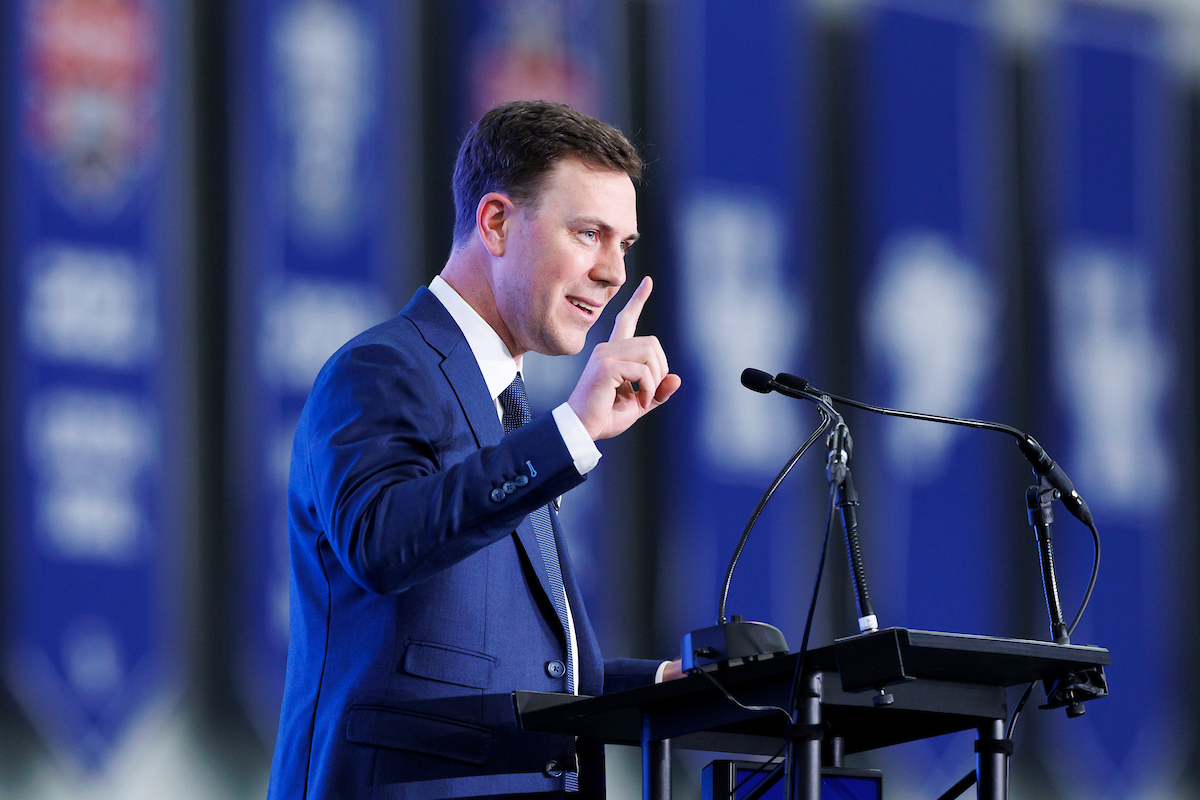
WILL STEIN: Yeah. Sure. Obviously excited to be here, excited to finally have the blue and white on officially and don’t have to change colors at all. Really exciting for me and my family. I had a great month of December and really January, finishing this roster out, building the coaching staff the way that I see fit to be our very best. We had 34 additions in the portal from January, 17 on offense, 14 on defense, 3 on special teams. We signed 13 high school kids as well. And we’ve, obviously, been active adding coaches to the staff. So exciting times to be a Kentucky Wildcat. I will open it up to any questions
Q Obviously, the deadline to enter for the spring semester has passed. But are you finished? Is there any room to add?
WILL STEIN: Yeah. There will be, I think, two announced today. But, yeah, we’re finishing up the roster. I feel really good where we are at. And we will continue to track that over the next couple of months to see if there are any future additions. But right now I feel really good.
Q Kenny Minchey — there is not a lot of tape out there on him. So, what did you see from him that made you want to get him to be the quarterback?
WILL STEIN: Extremely accurate. He’s got great athleticism. I think when you talk to him and you guys meet him, he is a phenomenal person, very smart. And, I mean, we did our background on him. Everybody we talked to, even guys on that staff felt like they still would have won 10 games with Kenny out there playing quarterback. I talked to NFL scouts on him. I feel like he’s got a really high upside in his game. And he is somebody that I was really excited to get.
Q Why do you feel — felt like that was the last piece you were all working on last week?
WILL STEIN: Yeah, you know, we finished up really well in that room. I think we got some really good young players as well. But yeah, I mean, right now I feel good about our guys. It’s just about staying healthy and getting these guys clued into the game plans and into our scheme over the next couple of months. But adding a guy like Nic Anderson, a really good player, you know, we added. We had multiple guys in that room. But I feel good.
Q You mentioned the health piece of that. You had a few guys who have a whole lot of talent but have had injury. How do you balance that when you are looking at transfers?
WILL STEIN: Yeah. I mean, I think it starts in our strength and conditioning program. Like Brandon Roberts is our strength coach. He’s a guy I’ve known for a long time. I think that is really going to be a big difference for us going into this next season, is our strength and conditioning and pairing that with great nutrition and in the training room just being really more aligned in that aspect of our program. And it will be huge in working along with sports science to make sure these guys are at their very best.
Q Will, kind of walk me through the process for evaluating the returning players, how you came to go through, maybe, leaned on for help, or was it all just you watching film and evaluating?
WILL STEIN: Yeah. I mean, the first thing we did was to look at this current roster and who we really needed to dive in to make sure that stayed on this roster in the 2026 season. And, you know, I feel really good about the returns coming back. But you are right, it’s a bunch of film study, it’s doing our research, it’s seeing what type of person they are, do they fit the character that we want on our team. And then, schematically, are they what we look for in each position? So while I was at Oregon, I was watching tape on our current team. I also have Pat Biondo, you know, who I think is the best GM in the country, who has done a phenomenal job since arriving here in Lexington. And then adding Pete Nochta from Louisville as our Assistant GM. And those guys have really spearheaded building this roster along with me. And I like where we stand right now
Q Will, how important was it to keep Ty Bryant?
WILL STEIN: Huge. Right? Lexington kid. He’s a program builder. He’s a leader, you know, all-conference. He is a phenomenal person. His dad played football here with my dad. So, obviously, that connection piece was huge. But he is a damn good ball player. And we wanted to make sure that he was on this team moving forward
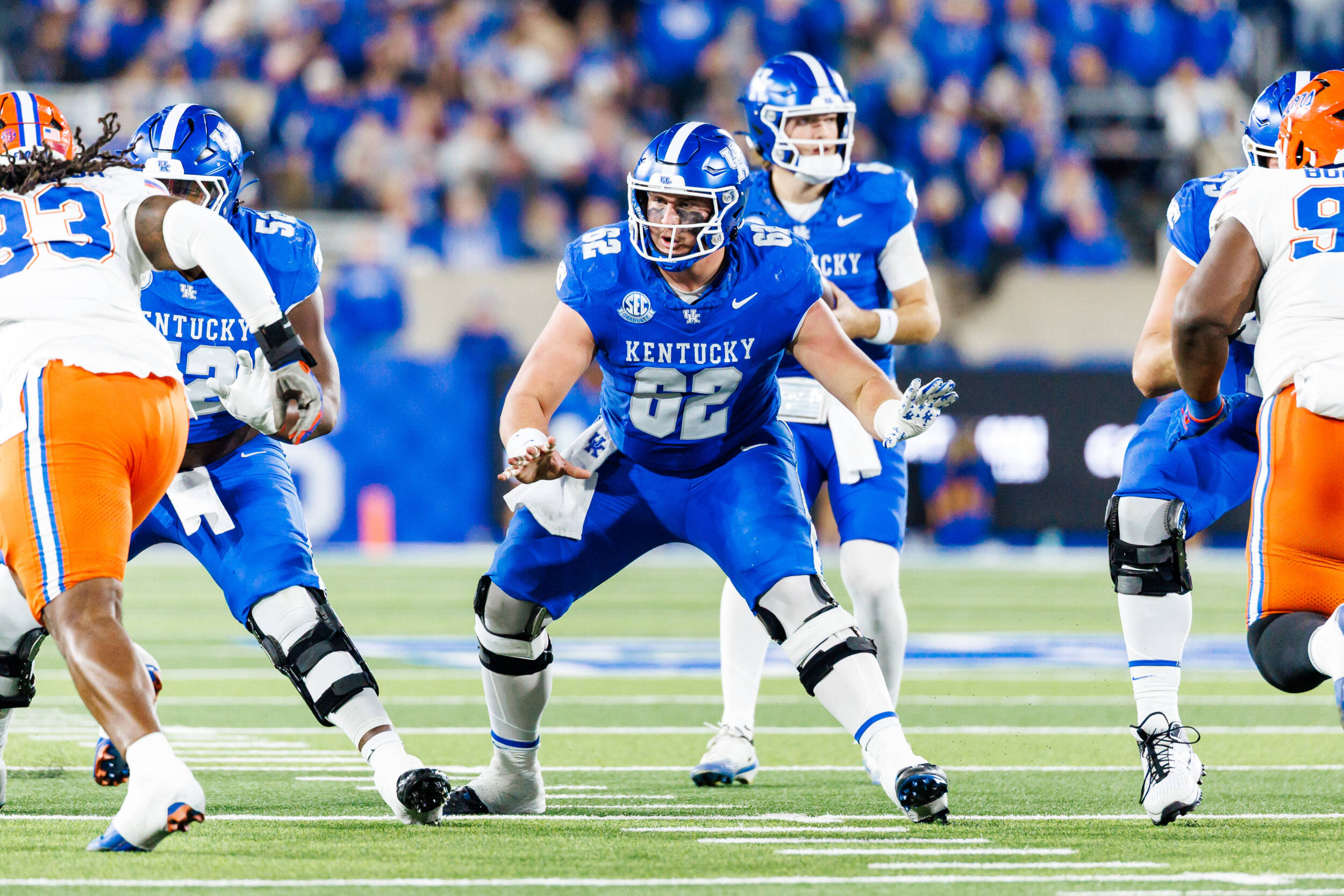
Q Offensive line seems to be a big priority; that’s the foundation of any offense. How do you feel about the guys you have right in there?
WILL STEIN: I feel really good. That was a major, major thing. I mean, the teams that win in November, December, January, we’re in the trenches. So making sure that we are solidifying the offensive line was a major piece to this puzzle, especially with whoever is playing quarterback for us, we want to make sure they are back there, they are healthy, they are able to see the field. And, you know, you had guys with a lot of experience upfront that are not just newcomers to this league or Power 4 football. And so far so good.
Q Will, given the perceived success you’ve had recruiting in the portal and the size of the coaching staff you have hired, should we take it that Kentucky is fully committed in terms of resources to compete at the top end of the SEC?
WILL STEIN: Yeah. I mean, I work for the best president, the best AD in the country. So these guys have done everything and more to support us. And, I feel really good about the future and making sure that we keep pushing the envelope. But I can’t say enough good about Mitch Barnhart and what he has done for me so far. And, yeah, I mean I feel like — are we completely there? I think everybody is trying to push – every program across the country. So it is not just Kentucky. But they have resourced me definitely in a good way to feel like we can push the envelope with player acquisition, retention, and then building the best coaching staff possible.
Q Will, with all the chaos surrounding new coach, juggling jobs, new coaches and new coaching staff and portal, how were you guys able to nail down what looks to be a real quality number of O-linemen?
WILL STEIN: Work, grind, talking with people all across the country 24 hours a day, fielding phone calls in the middle of the night, waking people up in the morning with our phone calls, and just grinding through it. I mean, it is not rocket science like the people that work the hardest through the portal, through recruiting. Give yourself the best chance. And then obviously, there are other factors involved in college football now. We felt like we had — we were strongly resourced to make sure that we got the right players. We are still pushing the envelope there. But we have fielded a team I believe that can go out there and compete, you know, immediately. And it really starts, like we have said, with depth. That’s the key part in college football. Can you provide great depth upfront, O-line, D-line, to give yourself the best chance later in the season.
Q Will, now that you are here, the roster is set, what is the goal for you with the program these next, I guess, two months before you all get on the grass and start, you know, actually practicing?
WILL STEIN: Yeah. I mean, right now the guys are working out four days a week. We are really setting a standard in the weight room with our strength and conditioning program, building out our DNA traits, connection, accountability, toughness, sacrifice, making that who we are, not just what we say. And really diving into the people. Right? I talk about connection a lot. My thing is learning everybody’s name on our roster. I know it sounds easy. You have got 105 guys you are working with. I wasn’t here for a month and a half really and now I am here. So now it is like putting the names with the faces and making sure that they know my connection is real with them. So we will have some opportunities to build that connection over the next couple of weeks with some meals that we do outside of the building or some of our get-real sessions on Wednesday nights to dive into the people. And then along that it is really building the strength and conditioning necessary to go out in spring football and be able to complete.
Q Will, you had the law firm out at Oregon, where a lot of coaches working with that offense line. So I know you have got at least three. What does that look like? And is it still going to be a law firm here? Are we still going to be called that?
WILL STEIN: Yeah. I will, like, pat myself on the back. I did dub them the “law firm.” So it is something that I did create, which is fun. But, yeah, I mean O line there’s 20 guys in the room. If you have one O-line coach it is just not enough to see all five working at the same time. So, we have two right now with Cutter and Derrick. We are bringing in a third. And then Paul is our GA. And then you like to have another student assistant type body in there. So you have five coaches for five guys at the same time. That’s the goal. Obviously, four is definitely doable. But just like O-line, receivers, D-line, you want more coaches in those rooms because you play with more guys on the field at those positions.
Q Jamarrion Harkless is another Lexington kid that you all brought back. What did you see him in?
WILL STEIN: The big chops. Yeah. Big interior body that can cause havoc upfront and a guy that has a lot of pride in this city. So excited about him. You know, all the guys in that room, I think Coach Bateman and crew did a great job of evaluating the talent. And then obviously acquiring them through the portal. And he is going to be a big addition.
Q What about Jay Bateman’s philosophy made you want him for defensive coordinator and how different schematically is that than what fans and returning players are used to?
WILL STEIN: Yeah. I mean, number one about Jay, awesome dude, can connect with any player from any demographic. Just a phenomenal person, number one. He’s, you know, done more with — I don’t want to say more with less, that’s not the right way to say it. He’s a veteran, right, a veteran coordinator. That is something that I was looking for, too, a guy that has been in college for a while, who has been on that side of the ball, who has been through ups, downs, and currently was at, you know, an elite spot on defense with Texas A&M. I think Jay is creative. I think he is aggressive. He is also willing to learn new things. And I just felt like I would work best with Jay Bateman on a day-to-day basis. And on top of that, this guy hunts in recruiting, like he is a shark, he is a pitbull, he will go up against anybody. And there are no real tricks with Jay. Like, he is straight up. But he creates real bonds with these players. And excited really to work with him and see him blossom this spring.
Q Will, what do you make of your running back room right now? What do you like that you have with Jovantae Barnes?
WILL STEIN: Yeah. I mean, the running back room was young and we needed to make sure that we could get the proper players in there to go tote the rock. And really love, you know, you said Jovantae Barnes and CJ Baxter, what they provide from a depth and leadership standpoint. Those guys have played in the SEC, played in the Big 12. So they have ran the ball in big moments. So obviously really excited about them and the rest of the guys in the room. But our backs are going to be utilized a lot in this offense. We work out of 21 personnel and different two-back, even three-back sets at times. So, there will be big, really instrumental in moving forward.
Q Will, when you go down the additions you all have made, the state of Texas is on there a lot when it is home talent. Is that an area you feel like you are going to hit hard in high school recruiting and in portal recruiting? Because it is not something we have ever really seen Kentucky do before.
WILL STEIN: The best way that we’re going to move forward is really starting inside the State of Kentucky. It has to. I mean, in this next class, there is a lot of really good talent in the state right now, a lot. And when I see Kentucky at its best, it is home-grown talent. That’s where you have got to start. And then you look at really the five-six hour radius, you know, around us, Nashville, Cincinnati, Indianapolis, Chicago, Detroit, even going to Charlotte, Atlanta. Like those are the cities that you really want to hone in on, even St. Louis. And then this is a national brand. I mean, the University of Kentucky, this logo holds weight. So, this is where you can use your resources and your relationships you have built maybe prior to go into a state like Texas, to really dive into South Florida, even the DMV area, to use those connections to acquire players that want to be here. You know, we will go wherever. I mean, if there is a kid in Alaska that wants to play at Kentucky that’s good enough. We will go there. It doesn’t matter. In the new state of college football and recruiting, it is really about building relationships and making sure that we are consistent in our approach with those players and just bringing the best guys that fit our program.
Q The linebackers you added are both highly regarded in high school but didn’t play much last year. So what gives you confidence that they can come in and compete to be starters?
WILL STEIN: Yeah. I mean, high weight, speed. Those guys fit the build of really good linebackers that play in this conference. When you talk to them, they are football junkies, they love it, eat, sleep, breathe it. They are workers. And they might not have just had that full opportunity at their last spot. But we evaluated them. We got to learn them and their families. And there are some prior relationships there as well. And I felt like they were our best fit.
Q Will, what is it about Matt Ponatoski that you like, kind of what you see long-term with him?
WILL STEIN: Really accurate. He is a winner. He has played in the GCL in Cincinnati, really good competition. Cincinnati Moeller is a fantastic school. He is a two-sport athlete. He was Mr. Football and Mr. Baseball. I mean, that’s pretty incredible. A Gatorade Player (of the Year) in both. I think he is one of like three guys ever to do that. I recruited Matt at Oregon. He was somebody that we were super high him, really wanted, ended up taking another kid just because of the timing of it out at Oregon. But, had the relationship with him and his dad and mom, great people. And he is extremely accurate, throws the ball on time.
Q You obviously had a relationship with Matt. The other high school guys who you didn’t know, they all signed the first day you were here. What was that evaluation process like? Did you just decide to take everybody who was committed in the previous staff? How did that work?
WILL STEIN: Yeah. I mean, I’ve been on a staff before where they dropped a kid on the day of signing day. And to me that’s asinine; it’s really poor for a coach to do that. So, I mean, I wanted to give all of these guys the opportunity to learn me, to be a part of this program. Obviously, not everybody that signed is still with us. Which I get. This is not going to be for everybody. They might have had relationships elsewhere and wanted to go elsewhere and we said okay and was able to add people in the portal instead of bringing those guys. But I will say, the guys that signed, excited about them. I think some really good players. And, yeah, I just didn’t want to do anything initially and drop guys the day I get hired, the next day they have to find a new home. I thought that would be really poor by me.
Q Will, now that you have got a bulk of the actual roster and coaching staff together, what do you think the identity of this team is going to be moving into spring ball and then the season next year?
WILL STEIN: That is a good question. I mean, it is TBD still. You know, I think we are all still learning each other. We are currently in the stage of really phase one of our off-season, which is how much bigger, faster, and stronger can we get and can we just get a line, can we learn each other. So, I think the identity of the team will really show as we get through spring and some of our winter football opportunities. And it will bleed into the fall camp. I mean, our identity at Oregon last year was going to be 11 and 12 and then midway through the season we are at 21 and 30 personnel. So, it just changes based on who is available. It is really seeing the scheme fit with these players and then kind of building it through these next couple of months. So I want our guys to be tough. I want our guys to be disciplined and play for four quarters or however long it takes. So, that to me is the biggest, you know, stepping stone right now.
Q You mentioned the personnel changes, you had to really lean on your tight ends this year. What is it about Willie Rodriguez, that whole tight end room, but also Mikkel Skinner? We didn’t see him much but he feels like a different kind of athlete.
WILL STEIN: Yeah. I mean, Willie can play a lot of different spots. I think you can obviously line him up in the core, in the slide, in the backfield. He is — kind of wherever you put him, that’s where it looks like he fits. And Mikkel kind of the same way. He reminds me somewhat of a Kenyon Sadiq-type player that I had at Oregon, which is a really versatile athlete that we can use in a lot of different ways. So, I mean, both of those kids are working their tails off right now. Glad to get Willie back. That was a big get for us, just from a culture standpoint and just from a need. So, yeah, both of those guys I think provide a lot in that tight end room.
Q Will, when Coach Sloan met with us, he said you guys sort of formed a bond kind of recruiting against each other and got to know each other. So from your perspective, what about him was — what did you guys bond over and why did you want him here?
WILL STEIN: Yeah. I mean, Joe is a great guy. I did meet him through recruiting. We recruited a lot of the same quarterbacks over the past couple of years. And then we would Zoom a lot in the off-season, talk football. And we just had the same philosophy, the same identity. And he is another guy like Jay, who can really move the needle in recruiting. And he does a great job in that.
Q What would you say to somebody who is worried that there are a lot of young guys on this staff who have not been in coaching for a long time, what would you say to those people?
WILL STEIN: I guess, who do you think hasn’t been in coaching?
Q Well, you know, like — (laughter) —
WILL STEIN: I’m sorry. Seriously.
Q For only like three or four years. Like Tony Washington Jr. is a young guy. Like there’s a lot of very young coaches on the staff.
WILL STEIN: Okay. Yeah. I mean, I think experience is all relative. What we’re doing now in college football is not the same as we were doing 20 years ago. It’s just not. Everything is changing. Recruiting has changed, the portal’s changed. It is about adaptability. And these guys have shown me that they are the best people for these jobs. They relate to players. They connect with players. And then this is a guy that I’ve coached with, seen firsthand. This guy can coach. So I feel great about our staff. Are they young? Yes. I’m young. But it is a new age of college football. And to me it is about putting the best people in these jobs, high IQ, high character, guys that love coaching, really smart. They connect with players like I said. And, I mean, I know Tony was a really good player, too, you know. So he played the position. He scored a touchdown in the Rose Bowl. This guy is a star, to be honest.
Q Will, to follow-up on the O-line question. What did you like about Coleton Price and why is he such a big piece?
WILL STEIN: He is an all-league player. He is a veteran. I mean, the guy is married, you know. He is married. So, he is very mature. He has played big-time ball, an elite communicator, and really strong.
Q Will, I wouldn’t call Anwar Stewart a young coach. He might, but I wouldn’t.
WILL STEIN: Right.
Q Did you have a prior relationship with him or what was it about him that made you want to keep him on staff?
WILL STEIN: Obviously, he played here. When I thought about Kentucky football before I got here, I thought they had really good D-lines. So, Anwar is a big piece of that puzzle. And, you know, you just feel a bond with somebody when you get here. He was somebody that did whatever it took to help retain the players on our roster and acquire new talent. And, obviously, he is an alum here. I just felt like, you know, when you look at building a coaching staff, you obviously look at the people that are here, who can stay and who can’t. You want to do it in your own way. But there are still people on the staff, like a Josh Pruitt, that know a lot about this place that is a need. A guy like Anwar. Like these are people that I needed early on in the stages. And then they proved that these are the right people for the job. So, yeah, Anwar has been great. Really excited about him.
Q Will, when you think of Indiana and the program they have, and they are in the national championship game tonight, what are your thoughts on how teams can do that nowadays?
WILL STEIN: I mean, Coach Cignetti is an elite coach. They have a number one pick at quarterback, you know. They have got really good players. They have great scheme. They have invested in their program from the minute he stepped on campus. So, yeah, it can be done. That’s the exciting part about college football now. A team like Indiana is in the national championship game. And it’s no fluke that they have a real team. I lost to them twice. Got my butt whooped two weeks ago by them. They are a real team with real players and real coaches. And, yeah, that’s the beauty of college. And that’s what I am saying, you can be a young coach, old coach. If you are not adapting, you are lost. Like you are not going to win. And that’s the goal from us as a coaching staff. Obviously us as an athletic department as a whole, not just football, everybody to push the needle forward. And you can see IU has done that and done it really well.
Q Will, Nasir Addison entered the portal in December and then a week later withdrew and is back here. So how big was it bringing a guy back with so much experience?
WILL STEIN: Yeah. We wanted to give everybody an opportunity. Obviously, that’s not super typical. But in the day and age of the portal, you know, it can happen. So, yeah, he can play and we wanted to make sure he had an opportunity to be back here.
Q Speaking of big and long, you have got only a handful of guys on the roster under six feet. Was that intentional or is that just kind of how it worked out?
WILL STEIN: I don’t want a lot of Will Stein’s running out there. Right? We want some big guys that can run and catch and block and tackle. So high weight speed is obviously something we kind of start with as a measuring block and then we look at the intangibles after that.
Q Will, you have been described, like it or not, as a quarterback whisperer. You have had success, obviously, with QBs. What goes into that? What is the key, if there is one or two, to developing a good college quarterback?
WILL STEIN: There’s a lot. To me, it’s like working with the player. Like, there is so much like coach-to-player communication. But the guys I have been able to coach, great dialogue. Obviously, great passers and players themselves. But building the offense around them, not trying to fit them into my scheme, but like let’s fit our scheme, all right, into them and what they do well. So every player is different. The Frank Harris days at UTSA, Bo Nix, Dillon Gabriel, Dante Moore, Hudson Card when I was at Lake Travis, Sam Ehlinger, Shane Buechele at Texas, like they are all different. And this is not a cookie-cutter offense. It is how do we build it around them and what do they do best.
Q Will, is it kind of nice to have a guy like Ben Duncum from Lake Travis. Could you talk about him a little bit also, about your time there at Lake Travis, how that kind of started?
WILL STEIN: Yeah. I mean, Ben, when I saw that we had Ben signed or committed, that was exciting. Lake Travis changed my life. It allowed me to coordinate for the first time. I worked for Hank Carter, who is an elite high school coach in Texas. And I learned a lot about myself. I went to a program that won six state championships up to that point with a lot of returning coaches that were a lot older than me and really found my voice as a play caller. So it was really cool and a unique place and very grateful for that time.
Q Will, I would imagine the last six weeks are probably the craziest of our life. Is that fair?
WILL STEIN: Yes.
Q Was there one moment where, I don’t know if ‘hit the wall’ is the right term, but where the chaos was at its most chaotic that you are going to look back on and say, “How the hell did I do that?”
WILL STEIN: After the Orange Bowl. I had, like, a day here in the heat of portal — or no. That might have been the first day. Was that the first day the portal opened? Yeah. We had like 10 guys here. We were like the only team in the country that just like grinded to get guys here. I was on, like, no sleep. Yeah, that was probably the wildest day. But I truly have some of the best people in the world that were here that were grinding through it, that were on the phones constantly getting kids to campus, recruiting staff that had never really worked together, that were just figuring it out. And that was really encouraging for me to see, knowing that I am not here but things are getting done. But that was probably the most chaotic day.
Q Did you have a moment where, like, you maybe stepped off the practice field at Oregon and then you had to hop in, like, UK gear to get into FaceTime?
WILL STEIN: No. A lot of times I just had Oregon gear on and just took my hat off. (Laughter). But, yeah, I mean, that was happening every single day. You know, I was definitely lying to you guys and everybody that I was focused on one thing at one time. I was not. I was focused on everything at the same time. So you can imagine what that is like. But somebody told me, too, there is no crying from a yacht. I was the offensive coordinator at Oregon playing in the college football playoffs and I’m the head coach at Kentucky. So I think a lot of people would want to be in my shoes. And, yeah, so it has been really cool.
Q In that period how much sleep were you getting?
WILL STEIN: Not a lot.
Q How much do you normally get?
WILL STEIN: I mean, everybody was telling me how bad I looked, you know. I’m like, Ah. I mean, I was always a kid that liked to sleep, you know. That was like my MO, stay up late, sleep in as a kid. But, yeah, not a lot of sleep. I mean, I have two kids that are 3 and 1, so that already takes off as a parent. I’m in the college football playoffs, I’m the head coach at Kentucky, so, yeah, there was not a lot of sleep going on. So, you just try to — if you can get to bed earlier, that’s probably the best. But that’s really not happening either. So to answer your question, there was not a lot of sleep.
Q Will, Hank Carter said that you are not even close to the biggest competitor in your own family, that when it comes to that that Darby (Stein) is easily the winner.
WILL STEIN: Yes.
Q Is that true?
WILL STEIN: It is true. Darby hates to lose more than she likes to win, for sure. So I’m just so thankful for her. I mean, she is back in Eugene right now with the kids. She texted me “Day 10 of being a single mother.” I think that was today. (Laughter). I was like, Ah. I know. It is tough. Coaches wives, anybody in sports that is a spouse, it is a tough job just because we are not always there. And, you know, everybody thinks we are just having fun, we are just with the boys hanging out, you know, telling jokes in the staff room. But we are working. We are doing stuff that coaches have to do to win. But, yeah, she is definitely extremely competitive. You should see her play tennis. She didn’t play tennis growing up, but she has turned into a pretty good tennis player. So I’m excited about them getting to Lexington, building out a community even outside of football with people. And, yeah, it is going to be fun.
Q Will, how do you feel about like the rest of the quarterbacks? You talked about Kenny. But the other guys you added there like Brennen Ward.
WILL STEIN: Yeah. Sure. I mean, I like Brennen a lot. I’m excited about Brennen. I’ve got to know him more and more. And just watching his tape from practice here last year and watching his high school tape. Son of a coach. I mean, he can really throw the rock. He has got, you know, great intangibles too. I think he is a natural leader, a great communicator. So excited about him. We added JacQai (Long) from Marshall, who has played and started games. Carson Cruver from FAU. Obviously, Matt Ponatoski. So, I think the room is competitive, which is fun. And guys that might not have a ton of experience. But I think the upside of the ceiling on these kids is really high.
Q How worried were you about the baseball draft with Matt when you were recruiting him at Oregon and how much of a concern is that still or isn’t it?
WILL STEIN: I mean, everything that he said to me is that he wants to be a big-time college football player. So is it concerning? No. I mean, I’m just really grateful to be able to have the chance to coach Matt. And I think his best years are to come in football. He is obviously an outstanding baseball player and, you know, I would love to get him on the diamond here at Kentucky too and let’s do this thing together.
Q Will, a lot of us old-timers see you as this young, progressive, innovator guy. It is good to hear you talk about character. What would you say is one of the one or two most old-school non-negotiables that you want to see coming from your players in the locker room?
WILL STEIN: That’s a great question. Non-negotiables for a football player to me, guys that are accountable, you know. We have a little rule that is pretty simple, be where you are supposed to be when you are supposed to be there doing what you are supposed to be doing with great effort. So, can you be accountable? Can you show up on time? Can you do the little things right that take care of the big things? That’s huge. And in our sport, like, toughness, like mental and physical toughness. That is huge for a football player. It is a tough game, you know, played by really tough men. And the spotlight is on these guys all the time. Can they handle that? And in the fourth quarter when it is the hardest, can you look to the man on your left and your right and know that they are going to do their job. So those are two I would say kind of non-negotiables for me.
Q Will, since you became the coach at Kentucky, what’s been the reaction of your former Louisville teammates?
WILL STEIN: Supportive. Very supportive. You know, I have a few of them on staff now, you know, Justin Burke, my tight ends coach. Pete Nochta, who is my assistant GM. Kolby Smith is our running backs coach. So, yeah, super supportive. I mean, all of those guys are extremely happy. Is there a big rivalry? Of course. But I’m still their teammate and their friend and I have had an outpouring of support from former players, even people that have worked there prior or even are associated with that program, just because of my relationship prior to them.
Q Will, what exactly is Pete’s role for some of us too old to understand this new language. Can you explain exactly what his role is.
WILL STEIN: Pete’s our Assistant GM. So he works hand in hand with Pat Biondo, our GM, to build the roster, to be a liaison between really agents and players and, obviously, building out the board, too, meaning these are the players that we’re targeting and this is our way of going about acquiring them through recruiting tactics, right, actually talking to them, setting up visits, and then obviously negotiations, which are a major part of college football.
Q What are the kind of characteristics that go into a guy that fits that role?
WILL STEIN: Organization. Extremely well-organized, well-versed in contracts and just contract law, too. We, obviously, use our compliance office for that, that we have lawyers that are in there. Knowing the market, knowing what the cost of a player might be or the range. Obviously, knowing how to set up recruiting visits, how to send your coaches out on the road. There’s a lot. It’s a giant role in college football that you cannot run a program without. There’s just no way in hell. And with Pat as our GM, he’s my right-hand man. Like we are running this program together, obviously through my vision. But he is an expert in what it takes to get the best players on our team. And that’s not just money. That is truly recruiting, phone calls, visits, how that all looks, the actual evaluation piece, are we bringing in the right players. And then Pete is the next guy with Pat that we are working hand in hand with.
Q Will, how difficult is it or maybe not difficult at all to know a player’s value when the contracts are not necessarily publicly available for other schools?
WILL STEIN: Yeah, it can be difficult. And the price of a player has risen every single year. So you try to get a grip on the market by talking to different people and having those conversations. And then, like, what makes sense for you and your team, you know. Like you don’t have to overspend on certain positions. We have, even here and at Oregon, like we were not the highest bidders on every single player. It still goes back to relationships and building those relationships and, like, going to show players how they can develop in your offense, defense, and special teams, how they can develop outside of the field of play, what connections you have with people in the community to help these guys out once the ball goes flat. Like I tell them, there is no pickup YMCA football. Like I am not putting on pads to go play a pickup football game. So the ball is going to go flat. You are not going to play football forever. So those are the conversations with acquiring players that are more than just money. If the first thing they ask about is money, they are probably not the guy that we want. It’s just not. Like that is obviously a conversation now. Like, there is hiding that or talking — not talking about it. That is real. But that is not the first thing that we want to talk about.
Q Lance Heard was probably one of the more well-paid guys out there and he has got a lot of experience. Why was it so important to get a guy with that experience to play left tackle?
WILL STEIN: Yeah. I mean, the people in the NFL that get paid the most are the quarterbacks, left tackles, edge players, corners. I mean, that’s the market. And, so, we needed to do what was necessary. But, also, show him why he needs to be at Kentucky, why he needs to play for me and Cutter Leftwich and Derek Warehime in this offense. It was important that he can be in a modern pro-style offense that is going to utilize his skillset. And, so, he was completely committed to that. And he is a football junkie. The guys love it. So that is why I know he is going to be successful, it’s because he loves ball and it is not just about the dollar signs for him.
Q Will, I believe you have four guys who have called plays in college football. Was that something important to you, to get that kind of experience in just kind of your offensive staff?
WILL STEIN: Yeah, for sure. I mean, anybody that has called plays. It can get lonely at times. So when you have people in the room that can back you or help you through the process, then you feel more at peace with decision-making. But it’s not the end-all/be-all. But I just felt like these were the best guys for the job and it just so happens that they have called plays, which is good to rely on that experience.
Q Will, the recruiting trail for obvious reasons right now is taking us to basketball games. Are you big on kids that play more than one sport, that sort of thing?
WILL STEIN: For sure. For sure. I mean, I love kids that run track, play basketball, wrestle, you name it. If all you are doing is playing football, it is not going to make me not recruit you. But I love to see the athleticism, the competitiveness show up in other sports. And it is what you want high school sports to be, is guys that play multiple sports and really take pride in their school. And it shows their loyalty to the school as well.
Q Speaking of basketball, you know what it is like here in Kentucky. The University of Kentucky basketball program casts a long shadow. How do you anticipate, especially this age of NIL revenue sharing, and working with that program?
WILL STEIN: I’m the biggest Kentucky basketball fan you will ever meet. I went to Tubby Smith basketball camp like four times. I won the hotshot award. I won the free-throw competition. Hey, I hope every single program wins, basketball, baseball, football, the women’s volleyball, gymnastics, you name it. Like I want this to be the best athletic program in the country, which I believe it is and will continue to be. So, you are not going to find me complaining about men’s basketball or any other sport here.
Q Will, will you talk about Nic Anderson and having a guy that has played in Joe Sloan’s offense and how important it is going to be for the next season.
WILL STEIN: Yeah. I mean, I got to know Nic — I didn’t know him, actually. I got to watch him when I was coaching Dillon Gabriel. And I was like, this guy is popping off, number four, this dude’s a freak, making plays all over the field at OU. And, obviously, it was big to have Joe in that relationship piece to really solidified that he wanted to come here. And then show him how he is going to make plays in this offense. So he is a big, tall, fast, tough receiver that’s — I’m really excited to coach.
Q Your offensive linemen that you have retained, or the younger offensive linemen, are those guys you seek to compete for playing time this year or are those kind of building pieces for the future?
WILL STEIN: It is still to be determined. I mean, O-line and D-line are some of the most developmental positions just because of the physicality of the game. I mean, you might weigh 300 as a freshman coming in or 285 but you are still not strong enough to go against grown men that are playing defensive end or defensive tackles and especially in this league that might be 22 years old and have been lifting for the last four years. And, so, I mean we’ve played guys at freshmen that were freshman at the offensive line before. So, it is not like it can’t happen. It is just — just like all of these guys, it is a show-me world and the spring practice window will be where we determine that.
Q Will, the guy you replaced at Oregon, Kenny Dillingham, has been able to do some good things at Arizona State, including making the college football playoffs. What is it about Coach Lange and just people over at Oregon that set coordinators up for success when they take a bigger job and become head coaches?
WILL STEIN: I mean, I don’t know Kenny too well. But when I look at him, he is just authentically him. Like, he doesn’t try to be somebody that he is not. Even Dan. Dan worked for Coach Smart and Coach Saban and Coach Norvell. But Dan is him. You know, I’m going to be me. Do I have a blueprint for what success looks like and how to get that through the program I’ve been at the last three years? Yes. In terms of scheduling, practice, weight-training, nutrition, how it all gets aligned. But the best guys I’ve coached for or coached with or played for were themselves. And that’s the most exciting part about me being here, is I can be fully me. And that’s going to be somebody that’s extremely passionate about this university, passionate about coaching, putting really smart guys around me to help with decision-making and then cutting it loose, like not being afraid of anybody. You know, everybody keeps talking about you have got to do this, you have got to play these guys. I mean, they have to play us too, you know? Like they have got to play us. So, like, let’s put a great team together that’s tough, smart, dependable, plays four quarters of football, is connected, and let’s see what happens. Like that’s what I am excited about.
Q Will, this is kind of a broad question at the end for the fans. You describe your offense as modern. What makes it modern? What are fans going to see?
WILL STEIN: Modern. It is not huddling every play and get in the formation. It is not spread people out and go as fast as humanly possible. It is a blend of really kind of everything. And it is adaptable. We can play with multiple personalities. We can play with multiple tempos. We like RPOs. We love tempo. We also like two-back sets and getting downhill on people and adding extra people to the runs with fullbacks and tight ends. So, you know, I watch, like, the Bears and the Lions and the Chiefs. Like to me that is like modern football, modern pro style. And those are guys that I watch a ton of and try to emulate as much as possible with the personnel that we have available.
Q Will, I’m sorry I can’t let you get out of here without asking you about this. But, just, what were the conversations like with Cutter (Boley) before he ended up moving on?
WILL STEIN: Yeah. I mean, I wish him nothing but the best, number one. Great person. Obviously I recruited him prior to Oregon. You know, there are just some things that are out of our control. And I felt like we put a really good plan together in place and, you know, it just didn’t work out. And there is nothing wrong with that. And I am really excited about what he does at his next spot, his next venture. And I think he is a great person. Obviously, he is a good player. And, but, I know we are excited about what we have here and what we have to offer our players. And then the players that we added I think are the guys that really bought into this university and are ready to make this place great.